Feeding & everyday care
Wet or dry dog food: what suits your dog?
Your dog’s food should suit both their needs and your routine. A practical comparison, with tips for mixed feeding, portions and a clean feeding spot.

The food aisle offers plenty of choice. At home, the priorities are simpler: food your dog enjoys, tolerates and can thrive on. Wet or dry is only part of that decision. These questions help you choose a routine that works for both of you.
Start with complete nutrition
Look for the word “complete” on the label. Complete food is intended to provide the daily nutrients your dog needs; complementary food cannot do that on its own. Life stage matters too: a puppy’s requirements differ from those of an adult dog. Texture alone does not tell you whether a food is suitable.
Wet food: more moisture, more care after opening
Wet food contains much more water and offers moisture as part of a meal. Some dogs particularly enjoy its smell and texture. A separate bowl of fresh water is still essential.
Think about the practicalities: tins and trays need storage space, opened portions need prompt refrigeration, and food bowls need cleaning after meals. Compare daily feeding costs rather than price per kilogram alone, because the amount required varies between products.
Dry food: straightforward to portion and pack
Dry food is convenient to weigh, store and take away with you. If you use some for training, set that amount aside from the daily allowance first. Otherwise, rewards can quietly become an extra meal.
A small serving can be misleading: dry food generally contains more energy per gram than wet food. A kitchen scale makes portions more consistent than a handful. Check the manufacturer’s guidance and whether the amount suits your dog’s body condition.
Can you mix wet and dry dog food?
Many healthy dogs can have both, including in separate meals. Tolerance and total quantity matter. A full dry-food ration plus a full wet-food ration would be too much.
Use mixed-feeding guidance for the specific products where available. “Half and half” does not automatically mean equal weights because the calorie contents differ. Include treats and training rewards in the total. Check with your vet before adding anything to a prescribed diet.
Change food gradually
If your dog does well on their current food, a trend is not a reason to change it. When you do switch, replace the old food gradually and watch appetite and digestion. An abrupt change makes it harder to work out what is causing a problem. Ask your vet for advice if your dog is unwell or has special dietary needs.
Make cleaning part of the routine
Removable food and water bowls make everyday care easier. You can refill the water or clear leftovers without moving the whole stand. Wash feeding utensils with hot soapy water after use; check material instructions before using the dishwasher. Clean the water bowl daily too.
Keep dry food sealed, cool and dry, preferably in its original bag inside a suitable container. Refrigerate opened wet-food leftovers promptly and follow the packaging’s storage instructions.
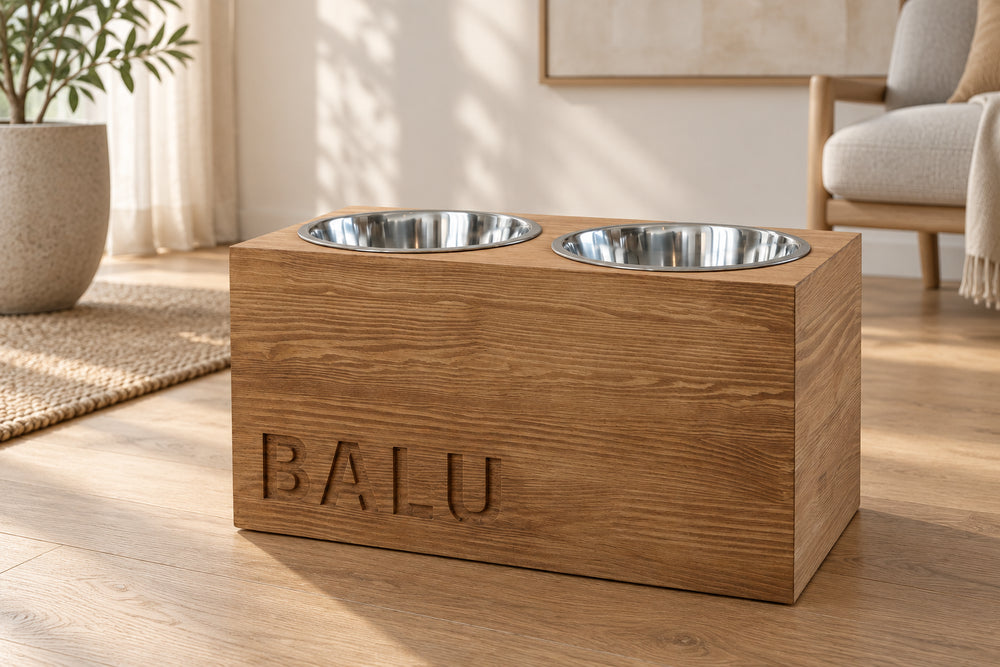
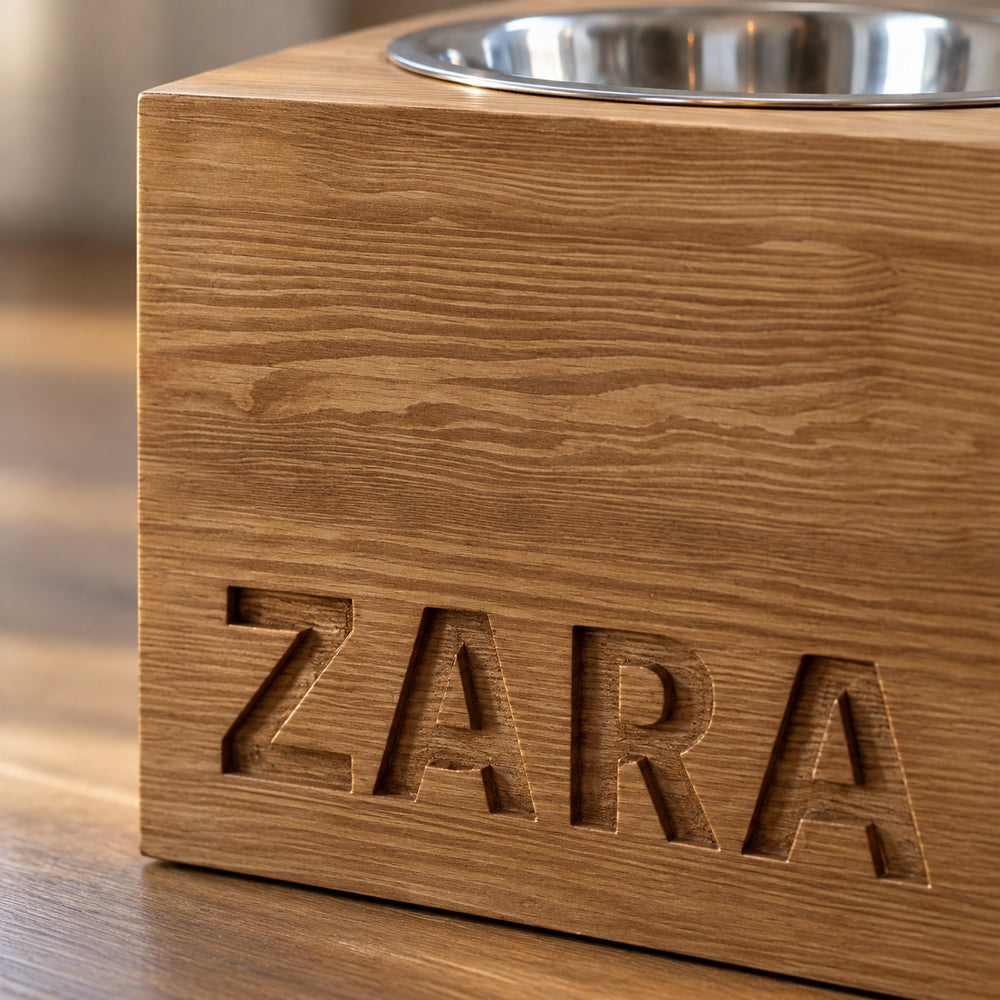
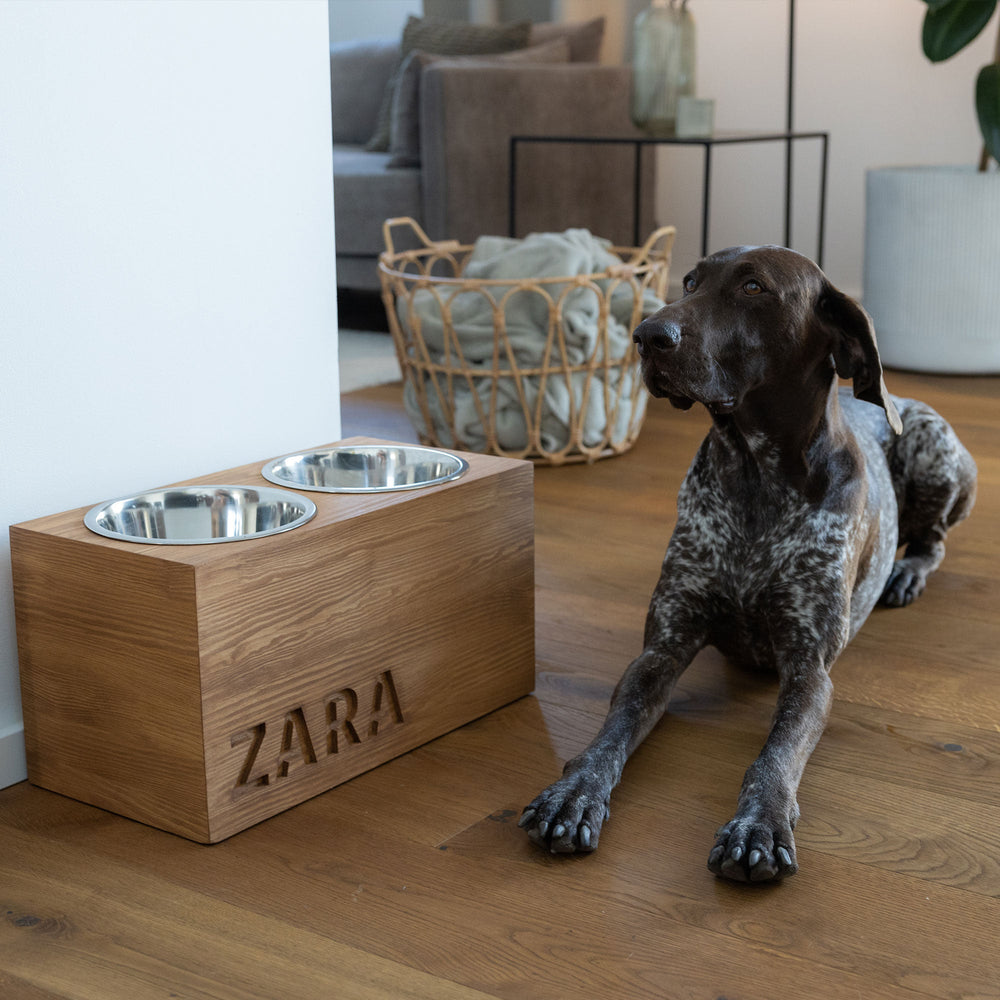
The Feddofy feeding station combines a wooden stand with removable metal bowls. Compare dimensions and bowl capacities before choosing. Wet or dry food does not call for a different wooden model; the useful questions are how much space and bowl capacity your routine needs.
Explore feeding stations and sizes ↗
Common questions
Is wet food always better than dry food?
No. Neither format is universally better. Suitable complete nutrition, tolerance and your dog’s individual needs are more important.
Can I feed wet food in the morning and dry food at night?
That can work. Calculate both meals as one daily allowance using guidance for the particular foods.
How can I choose without constantly experimenting?
List what matters to you: portioning, storage, travel and foods your dog has tolerated well. Choose around those points and avoid changing several things at once.